
Mortar & Margins 14
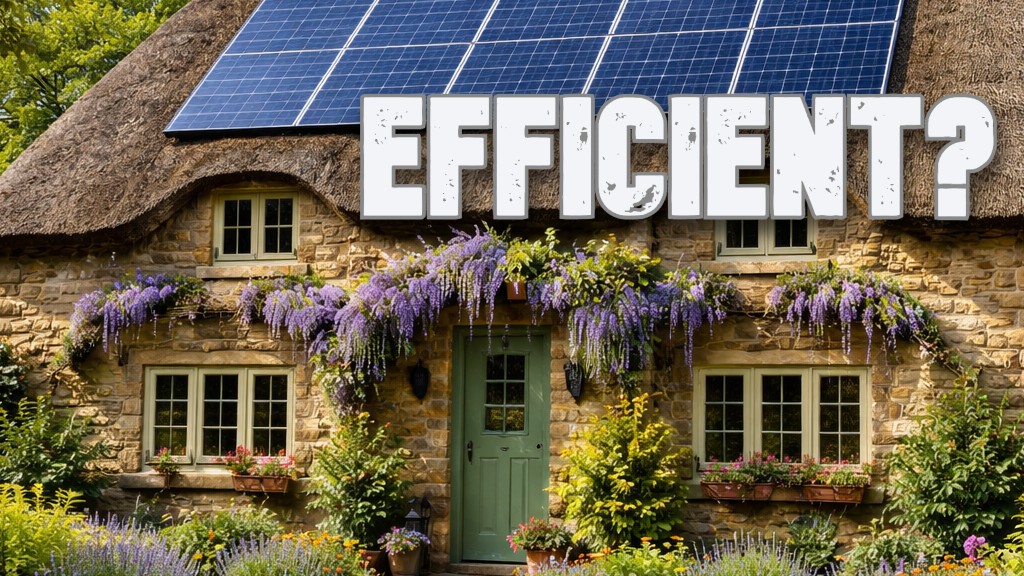
Imagine buying a charming stone cottage as a rental property. It looks cosy and appealing, the kind of home tenants love. Yet beneath the character and charm lies a growing problem. The house is cold in winter and its Energy Performance Certificate (EPC) rating is an E. Under the UK’s minimum energy efficiency standards, that may soon not be good enough. To keep renting the property out in the future, the landlord may need to raise the rating to a C – and doing so could cost thousands of pounds without necessarily increasing the value of the house.
This situation is becoming increasingly common across the UK rental sector. The rules governing EPCs have been in place for almost a decade. At present, landlords cannot rent out a property that scores below an E on the EPC scale. This rule has applied to new tenancies for about six years and to existing tenancies for roughly eight. Only a small portion of the housing stock originally fell below that threshold, meaning the regulation initially targeted the worst performing homes.
However, government proposals aim to raise the bar significantly. By 2030, rental properties may need to reach an EPC rating of C. The timeline has already shifted several times – originally expected by 2025, then 2028, and now likely 2030 – and uncertainty remains about how the policy will ultimately be implemented. Yet the direction of travel is clear: rental housing is being pushed toward higher energy efficiency.
Does the upgrade add value?
The policy reflects a broader environmental concern. Residential housing accounts for the largest share of carbon emissions in the UK. Improving the energy efficiency of homes therefore plays a central role in reducing national emissions. Rental properties have become a primary focus because regulating owner occupied homes is politically and practically more difficult.
For landlords, though, the challenge is not only environmental but financial. Upgrading a property to reach a higher EPC rating can be expensive. Proposals suggest a spending cap of around £10,000 per property to meet the new standards. For some landlords, particularly those with low value properties, that investment may not make economic sense.
Spending £10,000 on upgrades does not automatically increase the value of a property. Instead, the landlord may effectively be paying for the right to continue renting it out. In many cases, selling the property may appear to be the more rational financial decision.
This dilemma helps explain why properties with lower EPC ratings often come onto the market. Some landlords prefer to exit rather than face the uncertainty and cost of future upgrades. For investors who specialise in property asset management, these homes can still represent opportunities if the efficiency improvements are manageable.
What to look for when buying
When assessing such a property, the first step is to examine the building’s heat loss profile. EPC ratings are largely based on heat loss parameters. Surprisingly, some older homes perform better than expected. A Victorian mid terrace house, for example, shares walls with neighbouring properties. This reduces heat loss and can make it easier to achieve a higher EPC rating than people might assume.
One of the most effective improvement measures is internal wall insulation. Compared with external insulation, it is often significantly cheaper – sometimes only a third of the cost. It does reduce interior space slightly, which some owners dislike, but from an EPC perspective it can deliver strong gains.
Documentation is also critical. Any upgrade work must be evidenced clearly for the EPC assessor. Photographs and records of the installation help ensure the improvements are recognised in the assessment.
Solar panels can also dramatically improve an EPC score. Yet they present another economic complication for landlords. The main financial benefit from solar power flows to the tenant through lower electricity bills, while the landlord pays for the installation. Without a mechanism to recapture that value, the return on investment is difficult to justify.
Previous policy initiatives attempted to address this issue. The Green Deal scheme, for example, was designed to finance energy improvements through savings on energy bills. In practice, the expected financial returns often failed to materialise, limiting its effectiveness.
Government grant programmes have also been used to encourage upgrades. One recent scheme, known as ECO4, provided funding for improvements in properties with tenants on low incomes or in designated low income areas. However, the availability and structure of these grants have been uncertain, creating further complexity for landlords trying to plan ahead.
Can you stay ahead of the rules?
Adding to the uncertainty is the possibility of changes to the EPC assessment system itself. The current method, known as RdSAP, may eventually be replaced by a new Home Energy Model. If that happens, some properties that previously achieved a C rating could theoretically be downgraded under the new system. For landlords who have already invested heavily in improvements, that prospect is understandably concerning.
All of this contributes to a difficult landscape for property owners. The UK rental sector is already heavily regulated, with hundreds of pieces of legislation affecting tenancy management. Energy efficiency requirements introduce another layer of complexity, particularly because they involve long term asset management decisions rather than day to day property operations.
Ultimately, the transition toward more efficient housing is likely to continue. Reducing emissions from homes is an unavoidable part of the UK’s climate strategy. Yet the economic realities for landlords cannot be ignored. Without careful policy design – including realistic timelines, clear rules and workable financial incentives – the risk is that some property owners will simply leave the rental market.
For tenants, policymakers and landlords alike, the challenge is finding a path that improves housing efficiency while keeping rental supply stable. Balancing environmental goals with economic practicality will determine whether the policy succeeds or creates unintended consequences for the housing market.
ISSN 2979-1405 Mortar & Margins is produced in Solihull by Propenomix. Its editors are Duncan Hooper and Adam Lawrence