Mortar and Margins 14
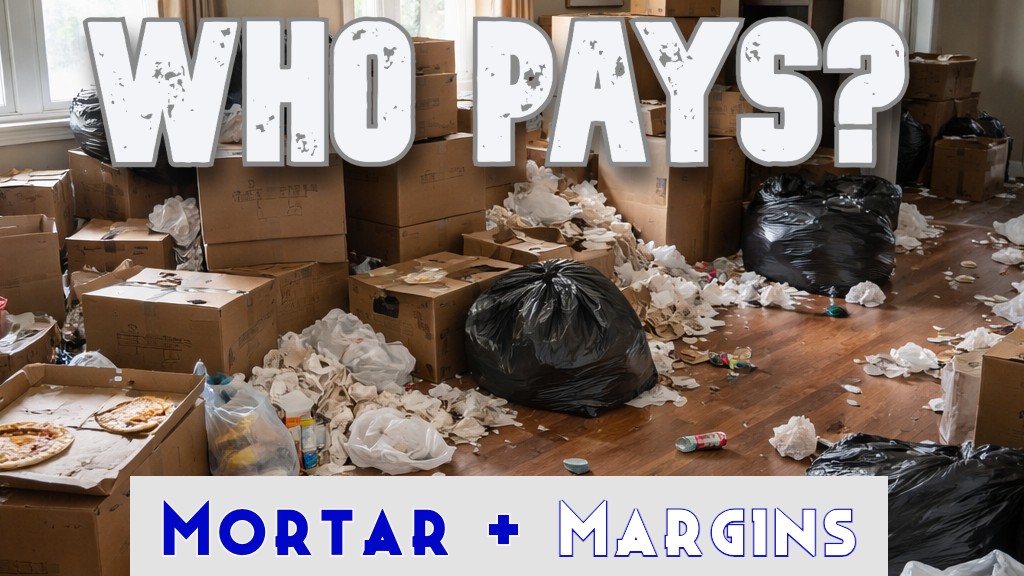
After six years, a tenant finally moves out. You open the door and immediately realise something is wrong. Boxes and rubbish are piled in every room. The property is in a terrible state. You have the tenant’s deposit, but it is nowhere near enough to cover the cost of restoring the home to a liveable condition.
Situations like this are not uncommon in the rental market. The key question landlords face is simple: what happens when the cost of repairing a property is greater than the tenant’s deposit?
When the deposit is not enough
The cost of clearing and repairing a property can vary enormously. Some landlords choose to handle parts of the clean-up themselves, while others hire professional clearance companies. Prices can differ widely depending on the scale of the damage and the service used.
If the deposit does not cover the full cost, landlords may still have legal options. Much depends on how the tenancy was structured in the first place. For example:
- Was there a guarantor?
- Is the guarantor a homeowner with assets?
- What paperwork was completed when the tenancy began?
If the tenant has left without resolving the damage, landlords can pursue them through the courts to recover reasonable costs – often via the small claims process. However, the landlord must first give the tenant an opportunity to rectify the situation themselves.
Understanding “fair wear and tear”
Many disputes arise because tenants and landlords misunderstand the concept of fair wear and tear. Deposit protection schemes provide guidelines to help determine what is reasonable.
For example, a carpet might have an expected lifespan of five years. If a tenant has lived in the property for three years and the carpet must be replaced due to damage, the tenant may only be responsible for a portion of the replacement cost. The remainder reflects normal depreciation that the landlord would have faced anyway.
By applying these guidelines consistently, landlords can avoid disputes and ensure claims remain fair.
Why cleaning disputes are so common
Cleaning is one of the most frequent causes of disagreement at the end of a tenancy. Whether a property meets an acceptable standard can be subjective. Was it professionally cleaned before the tenant moved in? Did the tenant attempt to clean it to a similar standard?
In practice, many tenants leave quickly and try to minimise their moving costs. Small issues such as rubbish bags left outside can become surprisingly expensive. Removing them might cost £100 or £150 once labour and disposal fees are included.
A pre-checkout inspection can make life easier for both sides. This gives tenants clear guidance on what needs to be fixed before they leave, such as filling wall holes or completing final cleaning. The goal is transparency – tenants understand expectations before the tenancy ends.
The value of a homeowner guarantor
One safeguard landlords can use is a guarantor – particularly a homeowner guarantor. Because they have assets behind them, they provide additional security if the tenant fails to pay for damages.
If necessary, landlords can pursue unpaid costs against the guarantor through the courts. In extreme cases, this may even result in a legal charge against the guarantor’s property. In practice, however, guarantors often help resolve disputes before matters reach that stage because they want to avoid financial liability.
Inspections and tenant behaviour
Landlords often ask how much influence they have over how tenants maintain a property during the tenancy. Legally, tenants are entitled to “quiet enjoyment” of the home, meaning landlords cannot interfere excessively.
Regular inspections are still essential. At least one inspection per year is really non-negotiable – although some landlords or agents prefer quarterly visits. These inspections help identify maintenance issues early and ensure the property is not deteriorating. adam-duncan
Ultimately, landlords own the asset, but they cannot control how tenants live their lives. Careful tenant selection remains the most effective form of risk management.
Mortar & Margins is produced in Solihull by Propenomix. Its editors are Duncan Hooper and Adam Lawrence