
Mortar and Margins ep 19
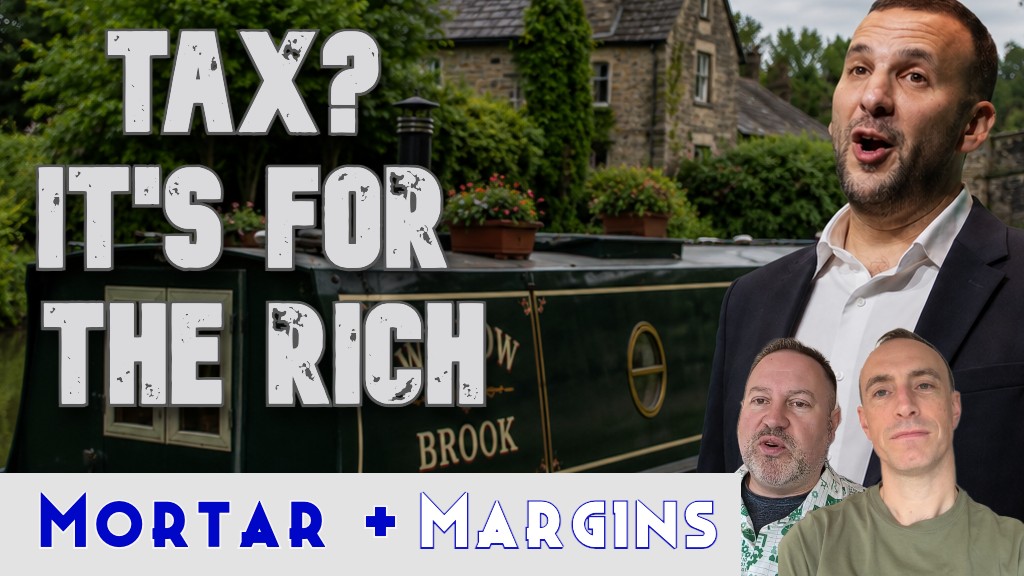
Zack Polanski’s council tax controversy has reignited a familiar debate about political hypocrisy, wealth taxes and the growing hostility towards landlords and property owners. What began as a dispute over whether the Green Party deputy leader should have been paying council tax on his canal boat residence has quickly evolved into a wider argument about fairness, taxation and the increasingly polarised politics surrounding housing.
The controversy centres on claims that Polanski avoided paying council tax on his primary residence because he lives on a boat. While there are legitimate exemptions for certain types of moorings and continuous cruisers, the issue becomes more complicated when electoral registration enters the picture. Questions have been raised about how someone can appear on the electoral register while simultaneously arguing they are not liable for council tax.
The row has struck a nerve because it taps into broader frustrations about politicians who campaign aggressively on taxing wealth while appearing to structure their own affairs in ways that minimise their liabilities. Critics argue that it reflects an “Animal Farm” style politics where some people advocate strict rules for others while finding ways around them personally.
Eliminating landlords
The backlash has been particularly intense among landlords and property investors, many of whom already feel politically targeted. Green Party rhetoric around “eliminating landlords” and imposing rent controls has created deep anxiety within the property sector. Critics argue that such language is deliberately inflammatory and ignores the economic evidence surrounding rent regulation.
Economists have long been sceptical of rent controls, with many studies concluding that while they may provide short term relief for some tenants, they ultimately reduce housing supply, discourage investment and worsen conditions for renters over time. The concern among landlords is not simply financial self-interest, but the fear that increasingly hostile political rhetoric creates uncertainty that damages the wider housing market.
Mamdani’s wealth tax
This debate is not confined to Britain. Across the Atlantic, New York politician Zohran Mamdani has faced similar scrutiny over proposals for wealth taxes and aggressive taxation of high earners. His policies reflect a broader global trend among left-wing politicians who argue that wealth inequality can only be tackled through significantly higher taxes on the rich.
The problem, critics argue, is that wealth taxes have historically struggled to work in practice. Numerous Western countries have experimented with them over the past two decades, yet many have eventually abandoned the policies due to capital flight, administrative complexity and lower-than-expected revenues.
One of the key issues is that wealthy individuals are often highly mobile. In the United States, high earners have increasingly relocated from high-tax states like California to lower-tax states such as Texas and Florida. Even internationally, the ultra-wealthy can move assets, businesses and residences across jurisdictions with relative ease.
There is also widespread misunderstanding about the nature of wealth itself. Much of the wealth held by billionaires is tied up in illiquid assets such as shares or property rather than cash sitting in a bank account. Taxing that wealth annually can create practical problems because individuals may be forced to sell assets simply to meet tax liabilities.
The British debate over wealth taxation is often presented as though such taxes do not already exist, despite the UK having a complex web of taxes on wealth and assets. Inheritance tax remains one of the most contentious examples. Critics argue it disproportionately affects moderately wealthy households, particularly those with valuable family homes in London and the South East, while the ultra-rich are often able to avoid large liabilities through sophisticated tax planning.
Capital gains tax also sits somewhere between an income tax and a wealth tax, particularly for property investors. For landlords holding buy-to-let assets, the tax treatment depends heavily on ownership structures and the purpose of the investment. Over recent years, changes to mortgage interest relief, stamp duty surcharges and corporate ownership rules have already significantly altered the economics of property investment.
All of this feeds into a broader sense that Britain’s politics are becoming increasingly tribal and economically uncertain. Property owners fear further punitive measures, while struggling renters and younger voters feel permanently locked out of home ownership. Politicians on both sides attempt to appeal to these competing groups, often by presenting issues in stark “winners and losers” terms.
The result is a political climate where housing policy increasingly resembles culture war politics rather than long-term economic planning. Whether it is debates over council tax on canal boats, rent controls in New York, or wealth taxes in Westminster, the underlying tension remains the same: how do governments address inequality without damaging investment, stability and growth?
ISSN 2979-1405. Mortar & Margins is produced in Solihull by Propenomix. Its editors are Duncan Hooper and Adam Lawrence