
Mortar and Margins XV asks how to avoid default interest rates when projects go awry.
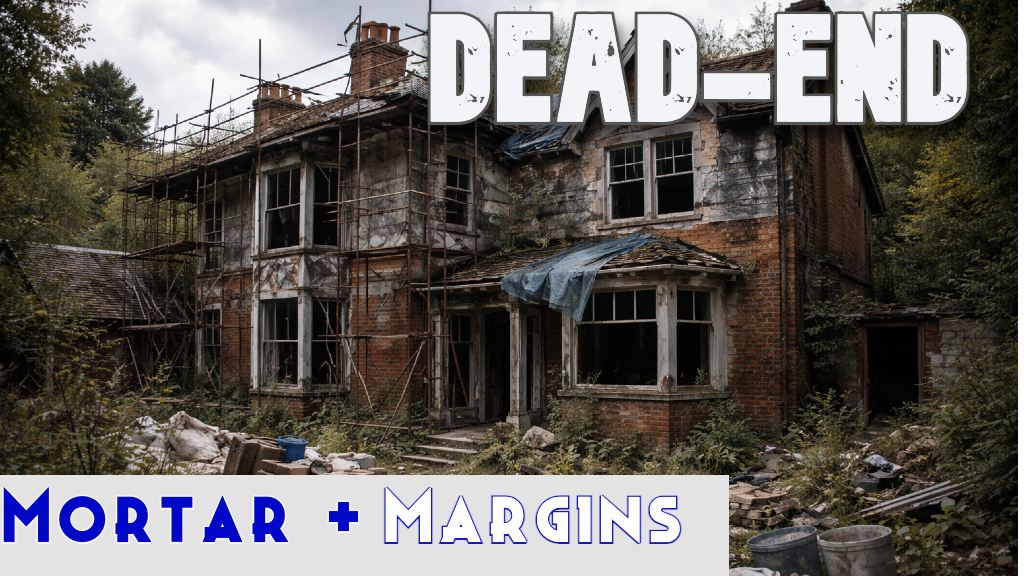
Property investment often begins with optimism. A derelict auction property appears full of potential, the numbers stack up, and bridging finance unlocks the opportunity. Yet the reality can quickly unravel. Delays to materials, unreliable contractors and stalled permissions can push a project beyond its timeline, leaving investors exposed to punishing default rates and an unsellable, uninhabitable asset.
At the heart of this scenario lies a simple but critical lesson: liquidity matters. Bridging finance is not inherently problematic – it is widely used by experienced investors – but it becomes dangerous when paired with thin margins and no financial buffer. When a project stalls, the options narrow quickly. Either fresh capital must be injected, or the property must be sold, often back through auction. Inaction is the worst possible response, as time compounds the financial pressure through escalating interest costs.
Do your homework
Avoiding these situations begins long before a bid is placed. Successful investors protect themselves on entry by ensuring they are buying at a price that reflects both speed and risk. Auction purchases should already factor in the cost of a quick transaction, meaning the true exposure is limited to fees rather than the asset’s full value. However, development risk introduces a more complex challenge. During refurbishment, value is often destroyed before it is created, leaving partially completed properties particularly vulnerable if a forced sale becomes necessary.
This is why contingency planning is essential. A refurbishment project should typically include a 15 to 20 per cent contingency fund to absorb unforeseen costs. Equally important is having multiple exit strategies. Projects that rely on a single outcome – such as selling into a specific market – carry heightened risk, especially during periods of economic uncertainty. By contrast, maintaining flexibility, such as the ability to refinance once a property becomes habitable, provides a crucial safety net.
ISSN 2979-1405 Mortar & Margins is produced in Solihull by Propenomix. Its editors are Duncan Hooper and Adam Lawrence